

For the past two years, the phrase “AI agent” mostly lived in product roadmaps and conference keynotes. This week it moved decisively into the day-to-day operations of ordinary businesses. Two announcements in particular — a low-code agent-building platform aimed at non-technical staff, and a nationwide small-business enablement program from one of the leading model providers — illustrate how quickly “AI as a tool you prompt” is turning into “AI as a coworker you configure and supervise.”
From Chatbots to Coworkers
The clearest signal came from a major CRM and marketing platform, which opened a public beta for a new agent hub this week. Rather than asking customers to write code or hire developers, the company built a canvas-style interface where sales, marketing, and support staff can assemble their own agents using plain-language prompts, connected knowledge sources, and existing customer data. The pitch is simple: if an employee already knows how to write a good brief for a junior colleague, they can now “brief” a piece of software the same way.
What makes this moment different from earlier waves of workflow automation is the framing. These are not scripts that fire on a trigger and execute a fixed sequence of steps. They are agents that interpret a goal, decide how to pursue it, and adapt their approach as circumstances change. A support agent that used to follow a rigid decision tree can now read a customer’s history, infer intent, and choose from a range of possible responses, all without a human writing new logic for every edge case.
Early customers cited in this week’s rollout illustrate the appeal. A virtual literacy tutoring organization operating across two dozen states built a custom agent whose only job is to track down and parse school district academic calendars — a task that used to consume a staff member’s morning and now takes seconds. Multiply that kind of saving across an organization with hundreds of routine, judgment-light tasks, and the projected time recovered annually climbs into the hundreds of hours. It is not a glamorous use case, but it is exactly the kind of unglamorous, repetitive work that has always been the best early target for automation.
The Isolation Problem
The same announcement, however, surfaced a wrinkle that is likely to define the next phase of enterprise AI adoption: agents built and deployed in isolation from one another. The platform’s own marketing highlighted a scenario in which a sales prospecting agent reaches out to a customer during the very week a separate service agent is trying to resolve an open complaint from that same account. Two well-intentioned automated systems, each optimizing for its own narrow goal, can easily work against each other and against the customer experience as a whole.
This is not a hypothetical concern. As more departments spin up their own agents — often without a shared registry, a common data model, or a single team responsible for coordination — the risk of contradictory automated actions grows in direct proportion to the number of agents in production. A retail company might have a pricing agent that discounts a product at the exact moment a loyalty agent is emailing a customer about the item’s premium value. A hiring pipeline might have a scheduling agent booking interviews for a candidate a screening agent has just flagged for rejection. None of these failures require malicious intent or a technical bug; they are simply what happens when autonomous systems are not designed to be aware of one another.
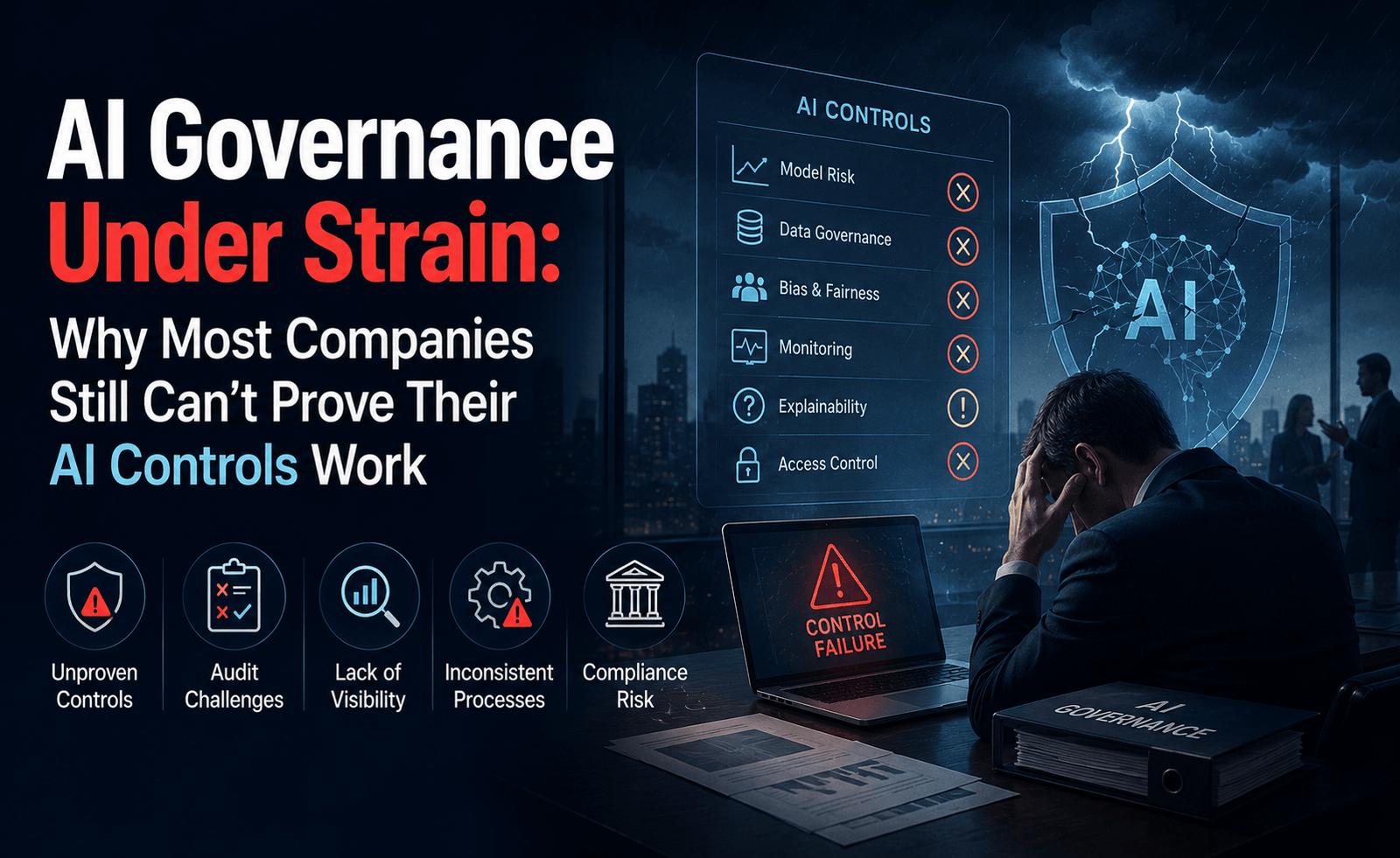
Solving this is less a modeling problem than an organizational one. Companies that adopt agent-building platforms at scale will need the same kind of governance layer that mature IT departments built for cloud infrastructure: a central inventory of what agents exist, what data and systems they can touch, and who is accountable when something goes wrong. Without that layer, the promised efficiency gains can be offset by the cost of untangling conflicting automated actions after the fact.
Meeting Small Business Where It Is
The second major development this week came from a leading AI lab, which launched a structured enablement program aimed specifically at smaller companies that have neither the budget nor the in-house expertise of a Fortune 500 IT department. The program bundles hands-on virtual training sessions, in-person AI academies held in several U.S. cities, getting-started guides written for non-specialists, and curated access to tools and implementation partners.
This kind of program matters because the gap between “AI is available” and “AI is usable” is often wider for small businesses than for large enterprises. A 500-person company can hire a dedicated AI implementation team; a 12-person accounting firm generally cannot. Programs that translate frontier AI capability into templates, checklists, and guided onboarding are arguably doing more to broaden real-world AI adoption than any individual model release, because they address the actual bottleneck: knowing where and how to start.
The scale figures released alongside the announcement are notable in their own right. The company behind the program reports that roughly ten million people now actively use its work-oriented AI assistant and coding tools combined. That is a meaningful jump from the enthusiast and developer-heavy user base that characterized AI chat tools just eighteen months ago, and it suggests the center of gravity for AI usage is shifting from “people who write prompts for fun” to “people who use AI because it is now embedded in how their job gets done.”
What This Means for Business Leaders
For executives evaluating whether and how to bring agentic AI into their operations, a few practical takeaways emerge from this week’s news:
- Start with an inventory, not a purchase order. Before adding a new agent-building tool, map out which teams already have automations running, what data those automations touch, and who owns them. Agent sprawl is easier to prevent than to unwind.
- Treat cross-agent coordination as a first-class requirement. If two agents can plausibly act on the same customer, account, or record, they need either a shared data layer or an explicit handoff protocol, not just good intentions.
- Match the tool to the skill level in the room. Low-code agent builders are compelling precisely because they let domain experts — not just engineers — encode their own knowledge into working systems. Evaluate platforms on how well non-technical staff can actually use them, not just on their theoretical capability ceiling.
- Budget for training, not just licensing. The enablement programs launching this week exist because the technology outpaced most teams’ working knowledge of it. Whatever platform a company chooses, plan for structured onboarding rather than assuming staff will figure it out unaided.
- Assign clear ownership before scaling up. Every agent in production should have a named human owner responsible for its behavior, its data access, and its failure modes. This is unglamorous governance work, but it is the difference between agents that compound value over time and agents that quietly create liabilities.
Learning From Earlier Automation Waves
None of this is entirely without precedent. Enterprises went through a similar reckoning a decade ago with robotic process automation, when scripted bots were deployed department by department, often without a central registry, and eventually produced the same kind of quiet conflicts now emerging with AI agents: two automated processes touching the same record with contradictory outcomes, and no single team positioned to notice until a customer complained. The difference this time is speed and scope. RPA bots were narrow, rule-based, and slow to build, which limited how many an organization could realistically deploy in a given year. Agent-building platforms compress that timeline from months to hours, which means the coordination problem that took years to surface in the RPA era could surface within a single fiscal quarter for a company adopting agent hubs aggressively.
This has practical implications for how quickly governance needs to be established relative to adoption. A company rolling out RPA in 2015 had time to build a center of excellence before bot sprawl became unmanageable, because the bots themselves were expensive and slow to create. A company rolling out low-code AI agents in 2026 does not have that luxury. The governance conversation needs to happen alongside the first pilot deployment, not after the tenth department has already built its own unsupervised agent.
The Bigger Picture
Taken together, this week’s developments describe an inflection point rather than a single headline. Agentic AI is no longer confined to research demos or the most technically sophisticated enterprises. It is being packaged into low-code tools that marketing managers and support leads can use directly, and it is being paired with structured education programs designed to bring small businesses along for the ride. The technology curve and the adoption curve, which have often diverged in past waves of enterprise software, appear to be converging.
The organizations that benefit most from this shift will likely be the ones that pair enthusiasm for new capability with discipline about coordination and oversight. Agents that operate in isolation, however individually impressive, create friction at the seams between departments. Agents that are inventoried, coordinated, and clearly owned can compound their value across an entire organization. As agent-building tools become as easy to pick up as a spreadsheet, the deciding factor for which companies pull ahead will increasingly be organizational readiness rather than access to the technology itself.
Expect the next few months to bring more of both: more low-code agent platforms competing for the same non-technical buyers, and more structured training programs racing to close the knowledge gap those platforms expose. The businesses that treat this moment as a governance challenge as much as a technology upgrade will be the ones telling the better story a year from now.

Leave a Reply