
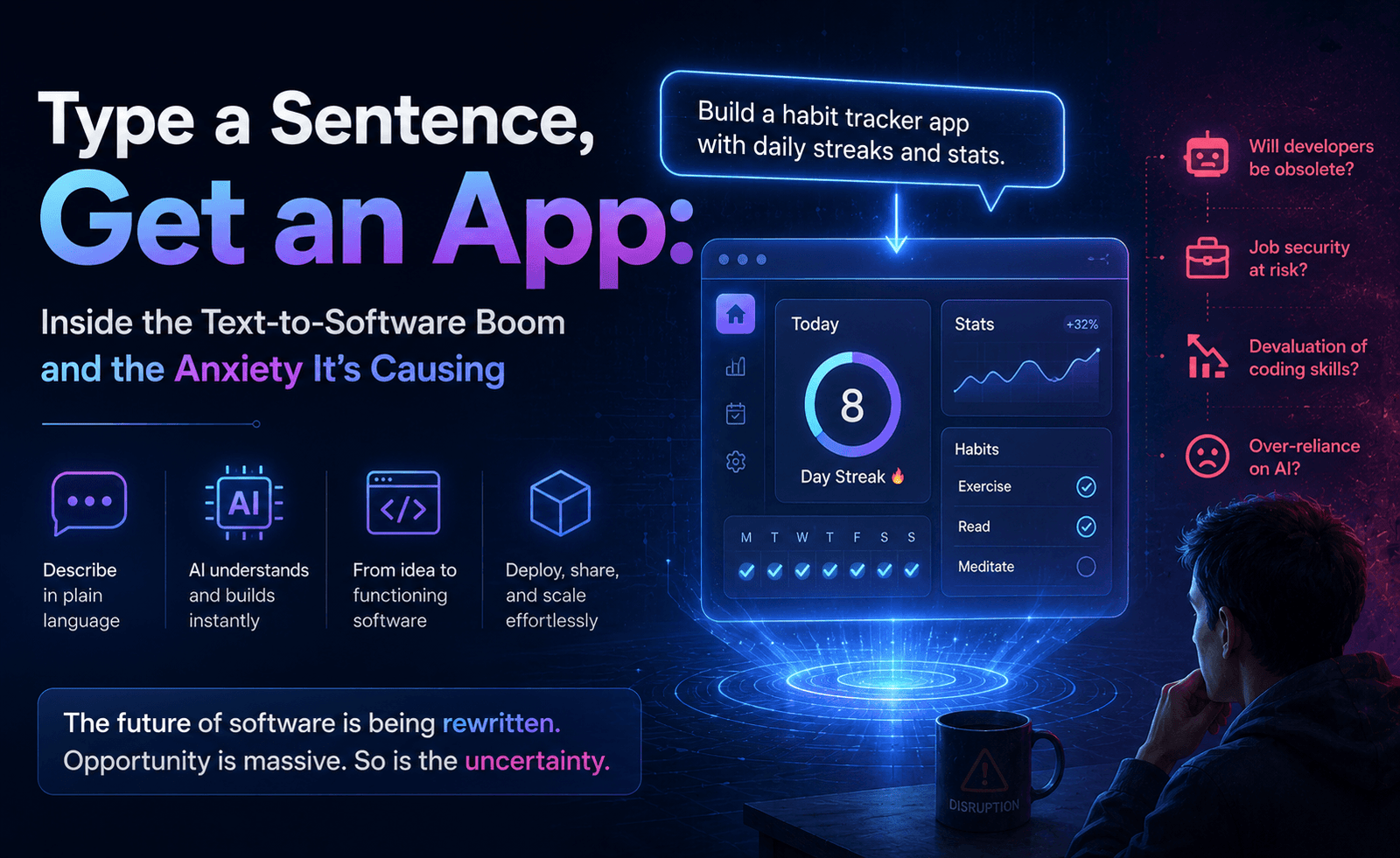
A quiet but consequential shift is reshaping who actually gets to build enterprise software. For decades, turning a business requirement into working software meant routing it through an engineering team, a process that reliably introduced weeks or months of delay as requirements queued behind other priorities in an already stretched development backlog. This year, that bottleneck is being dismantled at a pace that even optimistic forecasts from a few years ago did not fully anticipate, as no-code and low-code AI agent platforms mature from niche automation tools into genuine enterprise infrastructure.
From Simple Automation to Autonomous Agents
The category of tools now described as no-code or low-code AI agent builders represents a meaningful evolution beyond the workflow automation platforms that preceded them. Where earlier automation tools executed fixed, rule-based sequences, triggering action A whenever condition B occurred, the current generation of agent platforms lets non-technical business users design systems that interpret a stated goal, reason through the steps required to achieve it, and take approved actions across connected business systems with a meaningful degree of autonomy, all configured through visual interfaces, natural language instructions, and pre-built components rather than traditional code.
That distinction, between fixed automation and genuine agentic reasoning, is what separates this category from the robotic process automation tools that dominated the previous decade of enterprise workflow software. A no-code agent platform today can be instructed, in plain language, to monitor incoming customer support tickets, classify their urgency and topic, draft a contextually appropriate response, and escalate to a human only when its confidence in the appropriate action falls below a defined threshold, an entire multi-step reasoning and decision workflow that would have required substantial custom software development just a few years ago, now assembled by a support operations manager with no formal coding background.
Why This Is Happening Now
Three forces are converging to drive this shift. First, the persistent AI talent gap across most industries means that demand for custom AI-powered software vastly outstrips the supply of engineers with the specialized machine learning expertise historically required to build it, creating enormous pressure to find alternative paths to deployment that do not depend on scarce, expensive technical talent. Second, the underlying large language models powering these platforms have become reliable enough at multi-step reasoning and tool use that non-specialists can now direct them toward complex business workflows with a reasonable expectation of predictable, governable behavior, rather than the unpredictable, occasionally erratic outputs that made earlier generations of these tools too risky for many production use cases. Third, and perhaps most significantly, enterprise procurement patterns have shifted decisively toward platforms that explicitly promise to eliminate engineering dependency altogether, rather than simply making engineers more productive, a distinction that matters enormously to business units that have grown frustrated waiting in line behind other priorities in a centralized IT backlog.
Industry research reflects just how quickly this shift is happening. Analyst forecasts suggest that a large majority of enterprise applications will feature task-specific AI agents within the next several years, a dramatic jump from a base of under five percent just a couple of years prior, and separate research indicates the substantial majority of low-code tool users today already sit outside formal IT departments entirely, a share that continues to grow year over year as these platforms become more approachable for non-technical staff.
The Governance Question Nobody Has Fully Solved
This same democratization of software creation that makes no-code agent platforms so appealing also introduces a governance challenge that most organizations are still working out in real time. When software development required routing through a centralized engineering team, that team functioned, whether intentionally or not, as a natural governance checkpoint: code review, security review, and architectural oversight happened as a byproduct of the development process itself. When a marketing manager or support operations lead can independently build and deploy a functioning AI agent with access to customer data and connected business systems in an afternoon, that natural governance checkpoint disappears entirely unless organizations deliberately rebuild an equivalent oversight layer around the no-code platform itself.
Security and compliance considerations are increasingly recognized as a first-order requirement for evaluating these platforms, rather than an afterthought layered on once adoption has already scaled. Enterprise buyers evaluating no-code agent platforms are increasingly expected to prioritize certifications such as SOC 2 Type II compliance, configurable data residency options, comprehensive audit trails, and governance frameworks explicitly aligned with the specific permissions granted to each deployed agent, precisely because the traditional engineering-team checkpoint that used to catch security and compliance issues by default no longer sits between a business user’s idea and a live, production-connected agent.
The Market Is Scaling Faster Than Most Forecasts Anticipated
The financial trajectory of this category adds further weight to the argument that this is a durable structural shift rather than a passing enthusiasm. Market analysts tracking the broader no-code AI platform space have projected the category growing from a market size in the single-digit billions of dollars today to well over ten times that figure within the coming decade, a growth rate that outpaces most comparable enterprise software categories at similar stages of maturity. That scale of projected growth reflects not just enthusiasm from vendors eager to sell into a hot category, but genuine enterprise spending commitments: separate industry surveys indicate the substantial majority of enterprises intend to expand their AI investment specifically in this area over the coming year, even as many of those same organizations acknowledge they have not yet achieved what they would consider genuine AI maturity across their existing deployments.
That gap, between rapidly expanding investment and comparatively immature governance and operational maturity, is worth sitting with. It suggests an industry moving quickly enough that spending commitments are outpacing organizations’ actual readiness to manage what they are deploying responsibly, a pattern that has preceded difficult reckonings in prior waves of enterprise technology adoption and one that the governance-focused recommendations below are specifically intended to help organizations avoid repeating.
Choosing Between No-Code, Low-Code, and Custom Development
Not every enterprise use case is well suited to a purely no-code approach, and the more sophisticated organizations adopting these platforms are increasingly thinking carefully about which category of tool fits a given problem rather than defaulting to whichever platform is easiest to procure. No-code platforms excel at well-defined, relatively contained workflows: customer service triage, internal data lookups, routine document processing, and similar tasks where the range of required actions is knowable in advance and the business logic, while it may be complex, does not require deep integration with highly specialized or unusual internal systems. Low-code platforms extend that same visual-first approach but allow developers to add custom logic through actual programming languages when a workflow’s complexity exceeds what pure drag-and-drop configuration can reasonably express. Fully custom development remains the right choice for the smaller set of cases involving highly specialized business logic, unusual system integrations, or requirements that no off-the-shelf platform’s pre-built components can adequately accommodate.
The practical challenge for most organizations is that this decision is often made implicitly, by whichever tool happens to be easiest for a given team to access, rather than through a deliberate evaluation of which approach actually fits the specific problem at hand. That default-to-convenience pattern is precisely how organizations end up with the agent sprawl and governance gaps that have become one of the more common cautionary tales accompanying this year’s rapid adoption curve.
What Enterprise Leaders Should Prioritize
For organizations navigating this shift, several practical priorities stand out:
- Build an evaluation framework before adoption scales, not after. Establish clear criteria for which use cases are appropriate for no-code deployment, which require low-code extensibility, and which genuinely need custom development, before individual teams make that decision independently and inconsistently.
- Treat security certifications as a baseline requirement, not a differentiator. SOC 2 Type II compliance, data residency controls, and comprehensive audit logging should be non-negotiable minimums for any platform granted access to real business systems and customer data.
- Maintain a central inventory of deployed agents regardless of which team built them. The same coordination risks that come with agent sprawl in low-code platforms apply here with particular force, since these tools are explicitly designed to let teams deploy independently of centralized IT oversight.
- Match platform selection to team technical capability realistically. A platform that is technically capable of handling a complex use case is not automatically the right choice if the team responsible for maintaining it lacks the technical background to safely modify or troubleshoot it as requirements evolve.
- Revisit the no-code versus custom development decision as use cases mature. A workflow that started simple enough for a no-code platform may outgrow that platform’s capabilities as it takes on more edge cases and integrations; build in a periodic review process rather than assuming the initial platform choice remains appropriate indefinitely.
The Bigger Picture
The democratization of software creation that no-code AI agent platforms represent is, on balance, a genuinely positive development for organizations that have spent years frustrated by engineering bottlenecks standing between a business need and a working solution. But the same qualities that make these platforms so appealing, speed, accessibility, and independence from centralized technical oversight, are precisely what make governance the defining challenge of this category going forward. The organizations that succeed with this technology over the next several years will likely be the ones that pair enthusiasm for faster, more accessible software creation with the same discipline around security, oversight, and platform selection that has always separated sustainable technology adoption from a costly, unmanaged sprawl of well-intentioned but ungoverned tools.

Leave a Reply