

Mobile gaming in 2026 has stopped feeling like a compromise. The gap between what runs on a flagship phone and what runs on a console or gaming PC keeps narrowing, and the sheer variety of genres now doing well on mobile — tactical strategy RPGs, deckbuilding roguelikes, console-quality shooters, cozy life sims — means there’s genuinely something worth playing no matter what kind of game you’re into. At Topeny, we spent time across genres testing the titles that have defined 2026 so far, and this report rounds up what actually held up under real playtime, not just a trailer or a first-hour impression.
How We Approached This Roundup
Tens of thousands of mobile games release every year, and no single team can play all of them. Rather than pretending otherwise, we focused our testing on titles that were already standing out by download numbers, sustained player reviews, and community engagement, then played each one long enough to get past the tutorial and into its actual mid-game loop — because that’s where most mobile games either earn a long-term install or get uninstalled. We weighted our impressions toward three things: how the game actually feels to play in short mobile sessions, how fair or aggressive its monetization is once you’re a few hours in, and how well it runs on mid-range hardware, not just the newest flagship phones.
Best Overall: Balatro
Balatro’s poker-themed deckbuilding roguelike loop is still, in our view, one of the most addictive mobile experiences available in 2026. There’s no sprawling story and no live-service pressure — just the pure mechanical satisfaction of building synergies between Jokers and watching a hand’s score multiply into absurd numbers. It’s a premium, pay-once title rather than a free-to-play game, which is itself part of the appeal: no energy timers, no battle pass nagging you between runs, just the game. For anyone burned out on aggressive mobile monetization, Balatro is close to a palate cleanser.
Best RPG: Honkai: Star Rail and Arknights: Endfield
Turn-based RPG fans have two genuinely strong options this year. Honkai: Star Rail remains a standout specifically because its combat encounters are designed for short mobile sessions rather than the 45-minute grinds common in older gacha RPGs — a run typically resolves quickly enough to fit into a commute or a coffee break, without sacrificing the strategic depth of team-building and elemental weaknesses. Arknights: Endfield, GRYPHLINE’s real-time 3D strategy RPG, took a different approach this year, layering base-building and tactical positioning on top of its RPG core, and it’s earned a reputation as one of the strongest new releases of early 2026 for players who want more systems depth than a typical gacha title offers.
Best Open-World: Genshin Impact
It feels almost redundant to recommend Genshin Impact at this point, but it remains genuinely impressive that a roughly 50GB open-world action RPG runs as smoothly as it does on mid-range devices years after launch. Regular content updates, a large explorable world, and dynamic combat continue to keep it near the top of most-played lists, and its continued optimization work means it’s one of the rare “AAA-scale” mobile games that doesn’t demand a brand-new flagship phone to enjoy properly.
Best Shooter: Call of Duty: Mobile
Call of Duty: Mobile continues to deliver the most console-like shooter experience available on a phone, blending traditional multiplayer modes like Team Deathmatch and Domination with a full battle royale mode, all running at a visual fidelity that genuinely holds up next to older console generations. That fidelity comes at a real cost, though — expect a sizable install (well into the double-digit gigabytes once updates accumulate) and meaningfully higher hardware requirements than most other titles in this roundup, so it’s worth checking your phone’s specs before committing to a download on a data-limited connection.
Best Battle Royale for Low-End Devices: Free Fire
If Call of Duty: Mobile represents the high end of mobile shooter fidelity, Free Fire represents the opposite design philosophy, and it’s just as valid: matches run around 10 to 15 minutes with 50 players, mechanics are simplified and forgiving, and the game was built from day one to run well on budget hardware. That accessibility is a big part of why it maintains an enormous active player base, particularly in regions where budget devices are the norm rather than the exception.
Best Cozy/Life Sim: Stardew Valley and The Sims FreePlay
Not every mobile session needs adrenaline. Stardew Valley’s mobile port remains a near-perfect low-pressure experience — farm, fish, build relationships, put the phone down whenever you want without losing progress or missing a timed event. The Sims FreePlay continues to serve players who want an ongoing life-sim world they can check in on throughout the day, though its free-to-play systems lean more heavily on timers and premium currency than Stardew Valley’s flat, premium pricing model.
Notable New and Returning Titles Worth Watching
A few 2026 releases and major updates are worth flagging even if they haven’t fully settled into “best of” status yet. Rainbow Six Mobile brought Ubisoft’s tactical shooter formula to phones and generated real anticipation given the strength of its PC/console source material. Zenless Zone Zero and Wuthering Waves both pushed mobile action-RPG visuals further this year, though both are demanding enough that we’d recommend at least a Snapdragon 8 Gen 2 or Apple A16 Bionic-class chip for a comfortable experience. Vampire Survivors’ mobile version remains an excellent lightweight option that runs on nearly anything and works fully offline, which makes it one of the best “no data connection needed” picks in this entire list.
Comparison Table
| Game | Genre | Monetization | Device Demand |
|---|---|---|---|
| Balatro | Deckbuilding Roguelike | Premium (one-time purchase) | Very low |
| Honkai: Star Rail | Turn-Based RPG | Free-to-play, gacha | Moderate |
| Arknights: Endfield | Strategy RPG | Free-to-play, gacha | Moderate–High |
| Genshin Impact | Open-World Action RPG | Free-to-play, gacha | Moderate (well-optimized) |
| Call of Duty: Mobile | Shooter | Free-to-play, battle pass + IAP | High |
| Free Fire | Battle Royale | Free-to-play, cosmetics | Very low |
| Stardew Valley | Life Sim | Premium (one-time purchase) | Very low |
| Vampire Survivors | Roguelike Bullet-Heaven | Premium, offline-capable | Very low |
What We’d Skip or Approach Cautiously
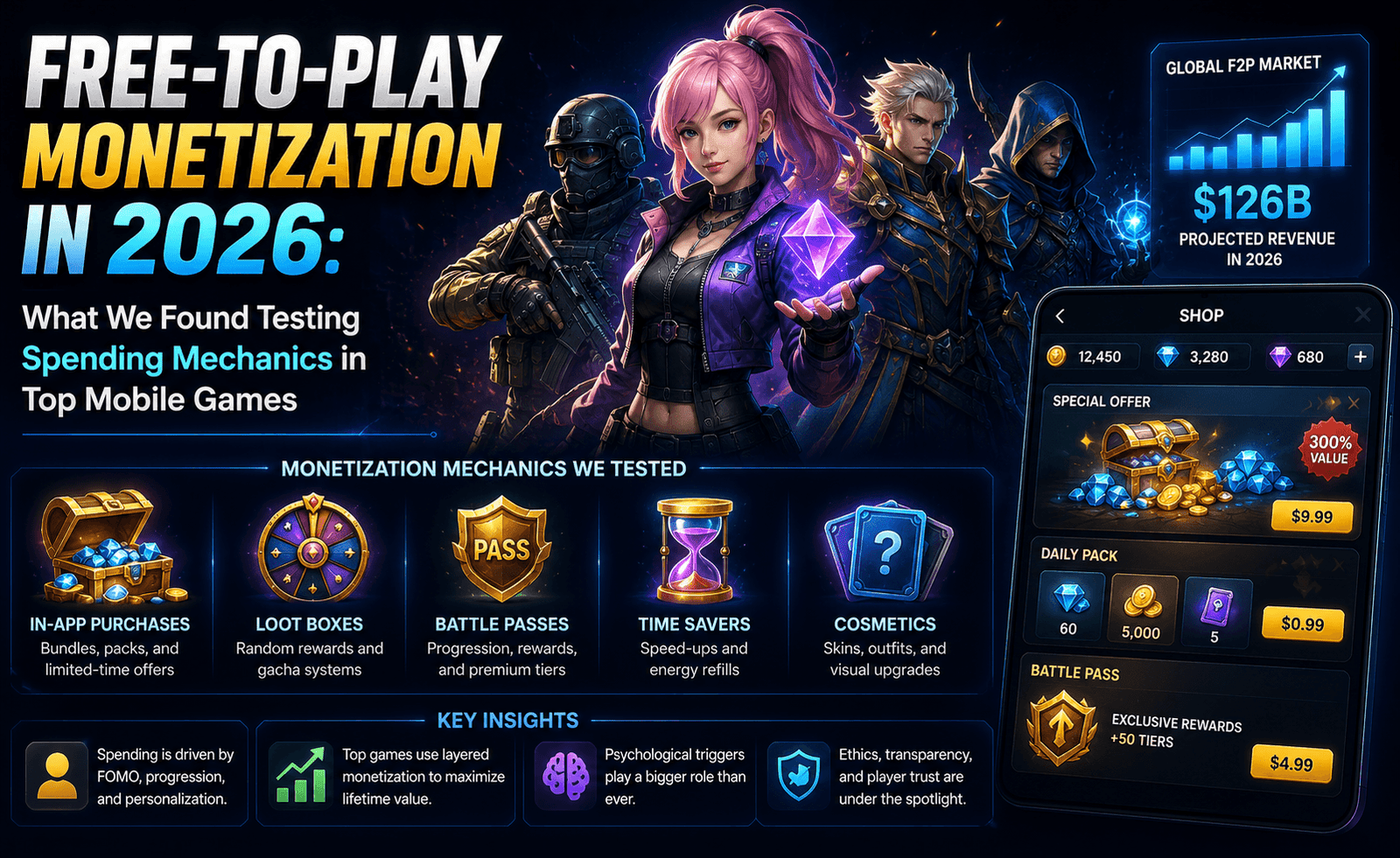
Not everything that trends is worth your storage space. Several high-hype gacha releases in 2026 launched with aggressive monetization that outpaced their actual content depth, and a few cozy life-sim titles have drawn real controversy over pay-to-progress mechanics disguised as cosmetic systems. Our general advice: play any free-to-play title through its first full content loop — typically several hours in — before spending real money, since that’s usually enough time to tell whether the monetization feels fair or predatory. We cover monetization patterns specifically, including what to watch for, in a separate test report in this category.
Frequently Asked Questions
What phone do I need to play the most demanding 2026 mobile games comfortably?
For the heaviest titles in this roundup — Wuthering Waves, Honor of Kings: World, Zenless Zone Zero — aim for at least a Snapdragon 8 Gen 2 or Apple A16 Bionic-class chip. Lighter but still substantial games like Genshin Impact and Honkai: Star Rail run comfortably on most mid-range phones from the last few years. Free Fire, Vampire Survivors, and Stardew Valley will run on nearly anything.
Which of these games can I play without an internet connection?
Vampire Survivors and Stardew Valley both work fully offline, which makes them strong picks for flights, commutes with poor signal, or simply saving mobile data. Most of the gacha and live-service titles on this list — Genshin Impact, Honkai: Star Rail, Wuthering Waves, Zenless Zone Zero — require a persistent connection.
Are premium (paid upfront) mobile games worth it compared to free-to-play?
In our testing, premium titles like Balatro and Stardew Valley consistently offered a more complete, pressure-free experience for a single fixed price, without the monetization design decisions that shape how free-to-play games are built. That’s not a universal rule — some free-to-play titles are genuinely generous — but if you’d rather avoid thinking about in-app purchases entirely, a premium title is usually the safer bet.
How often should I expect this list to change?
Mobile gaming moves fast — major titles ship large content updates monthly, and genuinely new releases with real staying power appear every few weeks. We revisit roundups like this one periodically rather than treating any single snapshot as permanent, and we’d encourage you to check a game’s current App Store or Google Play rating and recent review trend before downloading, since that reflects the game’s state today rather than at launch.
Bottom Line
2026’s mobile gaming lineup genuinely has something for every kind of player: Balatro and Stardew Valley for anyone who wants a complete, pressure-free premium experience; Honkai: Star Rail and Arknights: Endfield for RPG fans who want depth without excessive time commitment; Genshin Impact for open-world exploration that still runs on mid-range hardware; and Call of Duty: Mobile or Free Fire depending on whether your phone (and your patience for large downloads) leans toward high fidelity or high accessibility. As always in this category, we’d recommend trying before you spend — nearly everything on this list is free to download, and a first real session tells you more than any roundup can.



Leave a Reply