

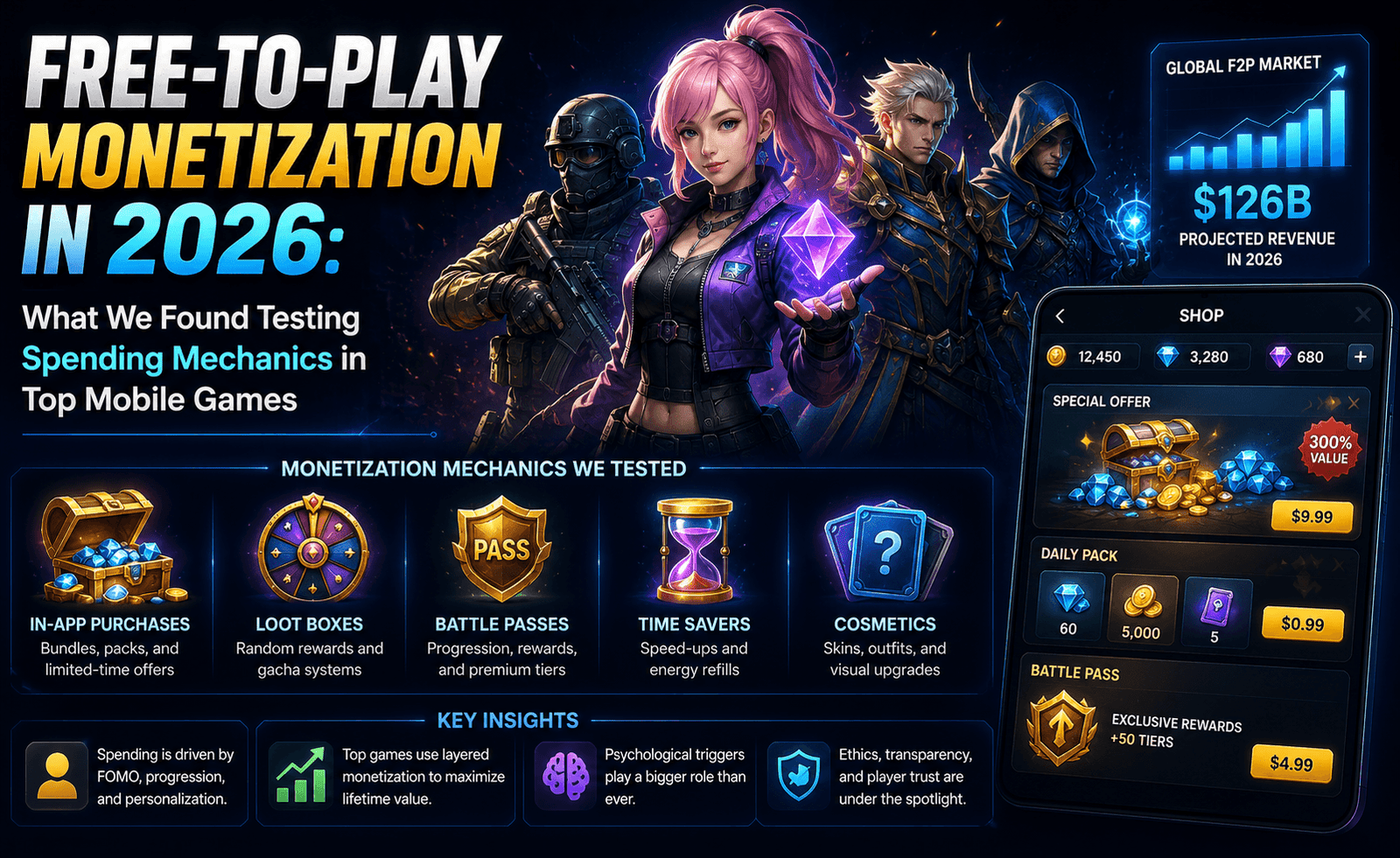
“Free-to-play” hasn’t meant “free” for a long time, and understanding how a mobile game actually plans to make money from you is one of the most useful things you can learn before you sink real hours — or real dollars — into it. We spent time testing the monetization systems across a range of top mobile games in 2026, looking specifically at how each spending mechanic is designed, how much pressure it applies, and where the line sits between fair monetization and something closer to exploitation.
Why This Matters More in 2026
Mobile in-app purchases are projected to generate well over $100 billion globally in 2026, and mobile advertising isn’t far behind, which means the financial incentive to design increasingly sophisticated spending mechanics has never been stronger. At the same time, the most successful studios have started shifting toward what the industry describes as “hybrid” monetization — combining in-app purchases, rewarded video ads, and subscription-style battle passes rather than leaning on any single mechanism — partly because pure aggressive monetization increasingly triggers player backlash and regulatory scrutiny, and partly because a diversified revenue mix is simply more resilient. Understanding which model a given game uses tells you a lot about what kind of pressure you should expect once you’re a few hours in.
The Five Core Monetization Models We Tested For
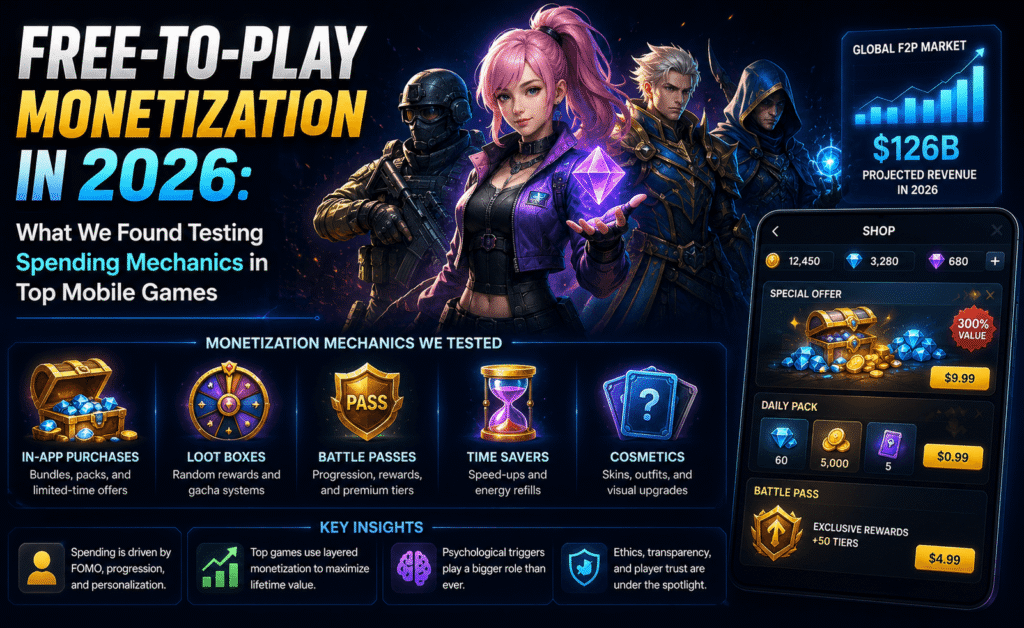
- In-app purchases (IAP): Direct purchases of currency, items, or upgrades — still the single biggest revenue driver across most successful mobile games, particularly in RPG, strategy, and puzzle genres.
- Advertising: Typically rewarded video ads today rather than the forced interstitials common years ago — you choose to watch in exchange for a concrete benefit, which is a meaningfully more player-friendly model than older ad formats.
- Gacha mechanics: Randomized rewards, most common in RPG and collection-focused games, where spending increases your odds or guarantees a reward after a set number of attempts (commonly called a “pity” system).
- Battle passes and subscriptions: A recurring or seasonal fee that unlocks a track of rewards, currency, or cosmetics over time, increasingly positioned as a steadier, more predictable revenue stream than one-off purchases.
- Premium pricing: A single upfront cost with no further monetization — increasingly rare, but still used by titles like Balatro and Stardew Valley, and often the most player-friendly model of the five when it’s available.
What Fair Monetization Looks Like in Practice
Across the games we tested, the healthiest examples of monetization shared a few common traits. Progress felt achievable through normal play without spending, even if it was slower than the paid path. Gacha systems included a visible pity mechanic — a guaranteed reward after a defined number of attempts — rather than pure unbounded randomness. Battle passes offered real value relative to their price even for moderately engaged players, not just for people who play daily. And rewarded ads genuinely felt optional, offering a real but not essential benefit, rather than being disguised as a mandatory step to progress.
Warning Signs We Flagged
On the other end of the spectrum, a handful of patterns consistently correlated with games that felt exploitative rather than fair in our testing. Energy or stamina systems that ran out quickly and refilled slowly, nudging players toward a currency purchase just to keep playing. Gacha systems with no visible pity counter or unclear odds disclosure. Time-limited offers using artificial urgency — countdown timers on “deals” that reappear identically the next day. And difficulty curves that noticeably spike right around the point a paid item would conveniently solve the problem, a pattern sometimes called a “power wall.” None of these tactics are illegal, and regulatory attention to loot-box-style mechanics varies significantly by country, but they’re worth recognizing before you’re several hours and several purchases deep into a game.
How Rewarded Ads Fit In
Rewarded video ads have become one of the more player-friendly monetization tools in 2026’s mobile landscape specifically because they’re opt-in — you choose to watch, and you get a defined benefit in return, whether that’s extra currency, a revive, or a temporary boost. In our testing, games that used rewarded ads well treated them as a genuine value exchange rather than a required gate, and interestingly, players who engage with even one rewarded ad in their first week tend to show meaningfully higher long-term retention than players who don’t, according to industry data — which suggests these ads work as a real engagement tool rather than just a revenue afterthought, at least when implemented thoughtfully.
Genre Patterns We Noticed
| Genre | Typical Monetization | What to Watch For |
|---|---|---|
| Gacha RPG / Strategy | Character/item pulls, battle passes | Pity system clarity, banner rate transparency |
| Casual / Puzzle | Rewarded ads, small IAP boosts | Ad frequency and whether ads are skippable |
| Life Sim / Cozy | Timers, premium currency, decor packs | Whether core progression is timer-gated |
| Shooter / Battle Royale | Cosmetics, battle passes | Whether any purchase affects competitive balance |
| Premium (paid upfront) | One-time purchase, no further monetization | Generally the lowest-pressure model available |
A Growing Trend Worth Knowing About: Web Shops
One monetization shift worth flagging specifically because it’s easy to miss as a player: a growing number of major studios now operate direct-to-consumer web shops outside the App Store and Google Play, where the same in-game currency or items can often be bought at a lower effective price. This exists because app store commissions on in-app purchases can run significantly higher than the fees charged by a studio’s own web storefront, and studios pass at least some of that savings on to encourage players to buy directly. If a game you play regularly offers an official web shop, it’s often worth checking prices there before buying currency inside the app — just be sure you’re on the studio’s actual official domain, since this pattern has also created an opening for scam sites mimicking legitimate game currency sellers.
How Regulation Is Starting to Shape Monetization
Regulatory attention to gacha and loot-box-style mechanics has grown steadily over the past few years, and some markets now require clearer odds disclosure or age-appropriate restrictions on randomized-reward spending. Partly in response, and partly because player trust has become a measurable driver of long-term retention, we noticed more titles in our testing voluntarily publishing pull-rate odds and pity-counter details directly in-game rather than burying them in external terms of service. That shift toward transparency is a genuinely positive trend worth rewarding as a player — games that clearly disclose their odds are, in our experience, also more likely to implement fair pity systems overall.
Practical Advice Before You Spend
- Play free for at least a few hours before spending anything. Most games’ true monetization pressure only becomes clear once you’re past the tutorial and into the mid-game loop.
- Look for a visible pity or guarantee system before pulling on any gacha banner. If you can’t find clear odds or a pity counter in the game’s official information, treat that as a caution sign.
- Set a personal budget before you start, not after you’re invested. Sunk-cost thinking is a well-documented factor in gacha spending specifically, and deciding your limit in advance is far more effective than deciding in the moment.
- Buy currency directly in an official web shop when available, after verifying you’re on the studio’s legitimate domain, since it’s often meaningfully cheaper than the same purchase made inside the app.
- Watch for artificial urgency, and remember that a “limited-time” offer that reappears identically week after week isn’t actually limited.
Frequently Asked Questions
Are gacha mechanics considered gambling?
This is a genuinely contested legal and regulatory question that varies by country — some jurisdictions have introduced specific loot-box disclosure or age-restriction requirements, while others have not classified gacha mechanics as gambling at all. We’re not able to give legal advice on this, and we’d encourage parents or concerned players to check their specific country’s current regulatory stance rather than assume a universal answer.
Can I have a good experience in a gacha game without ever spending money?
In many well-designed gacha titles, yes — free progression is slower but genuinely achievable, particularly if you’re patient about pulling on banners and prioritize the pity system rather than chasing every new release. The games we’d flag as concerning are the ones where free progress effectively stalls entirely without spending, which is a distinction worth researching (via community reviews and wikis) before you commit significant time to a specific title.
Why do so many games use countdown timers on offers?
Artificial urgency is a well-documented behavioral technique for encouraging faster purchase decisions with less deliberation. It’s not inherently deceptive if the offer is genuinely time-limited, but when the same “limited” deal reappears identically on a predictable schedule, that’s a signal the urgency is more about psychology than actual scarcity.
Is it ever worth buying a battle pass?
Often, yes, if you’re already planning to play the game regularly for its full duration — battle passes are frequently the best value-per-dollar purchase available in a well-monetized game precisely because studios want to encourage that predictable recurring revenue. The math tends to work against you if you buy a pass and then stop playing partway through its season.
Bottom Line
Monetization design in 2026’s top mobile games spans a wide range, from genuinely fair, opt-in systems to patterns clearly engineered to create spending pressure. The good news is that the warning signs are consistent and learnable — energy timers, unclear gacha odds, artificial urgency, and difficulty spikes right before a convenient paid solution are all recognizable once you know to look for them. Play first, budget in advance, and treat any monetization system that resists a clear explanation of its odds or mechanics with appropriate skepticism.



Leave a Reply