
Introduction
Testing Sora 2 in the summer of 2026 comes with a wrinkle none of the other reports in this series have to deal with: the product is being wound down. OpenAI discontinued the Sora web and app experiences on April 26, 2026, and has set the Sora API to follow on September 24, 2026. That timeline changes what a test report on Sora 2 is actually for. This is not a buying guide in the traditional sense, it is an assessment of whether Sora 2 is still worth building around during its remaining runway, and what teams currently using it should be planning for. The Topeny Team ran Sora 2 through our full test suite via the API, the only access point still active, to answer both questions.
What Is Sora 2?
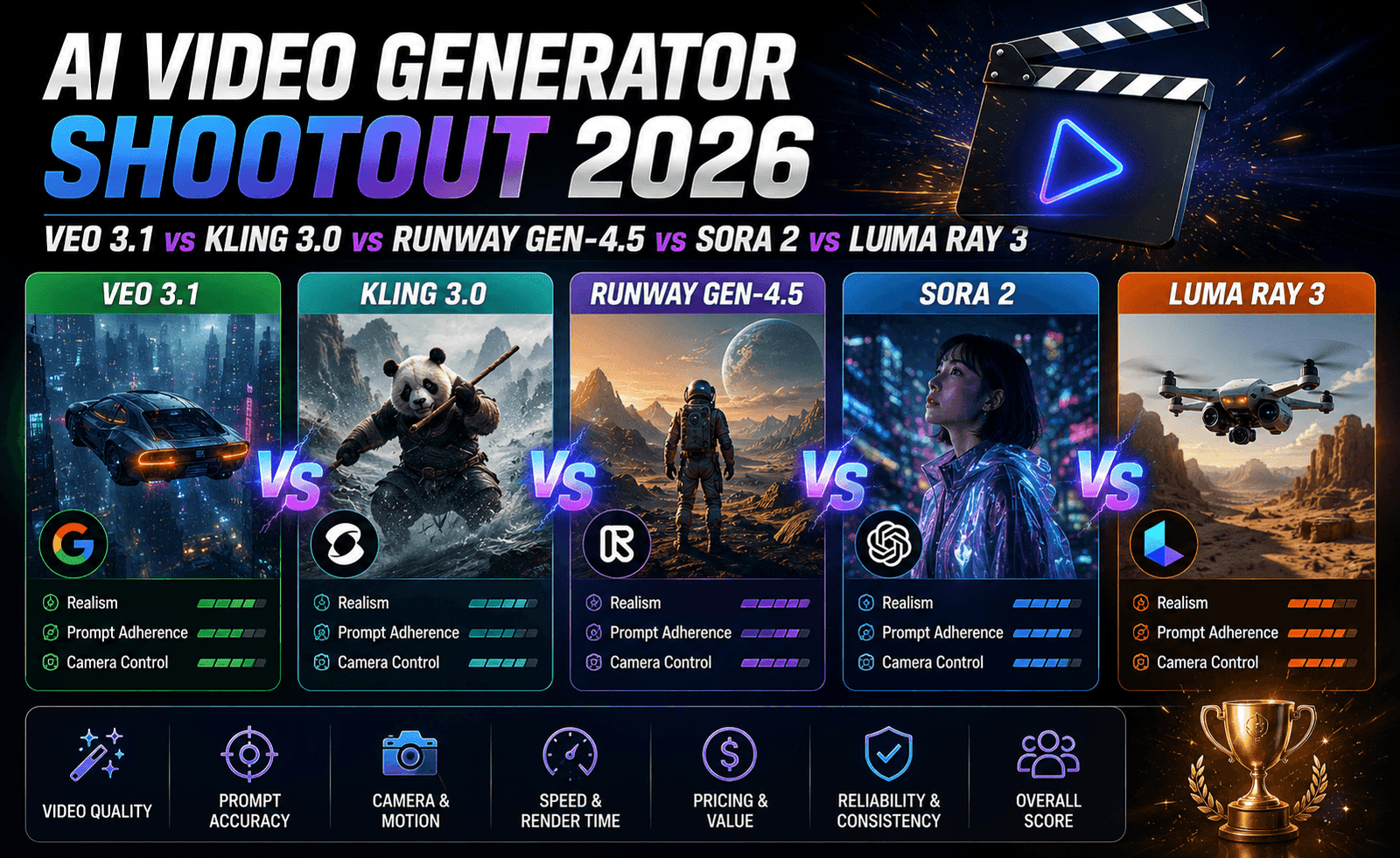
Sora 2 is OpenAI’s flagship video and audio generation model, released with a system card and documentation describing its capabilities and safety considerations in detail. At launch, it was positioned as a serious competitor on cinematic quality and, notably, on multi-shot narrative consistency across longer sequences, the ability to maintain character and setting continuity across several connected shots rather than a single isolated clip. Sora 2 Pro, the higher-tier variant, is priced at roughly $0.75 per second through the API, which makes it the most expensive model in this category by a wide margin.
Our Testing Methodology
We ran the same 40-prompt suite used across this entire report series: photorealistic human subjects, nature and environmental scenes, product shots, complex camera movement, dialogue and audio-dependent scenes, and, given Sora 2’s specific reputation, an expanded multi-shot continuity test with six connected shots rather than the standard three, to specifically stress-test the narrative consistency claim.
Key Findings
Multi-Shot Narrative Consistency
This is genuinely where Sora 2 still leads. Across our expanded six-shot continuity test, character appearance, clothing, and setting details held together more reliably over longer sequences than any other model we tested, including Kling 3.0, which is otherwise the consistency leader over shorter three-shot sequences. If your workflow depends on longer connected narrative sequences specifically, Sora 2 is still, on pure capability, the strongest option we tested.
Cinematic Quality
Sora 2 produces genuinely film-grade output with strong prompt adherence, particularly on scenes with clear cinematic reference points, such as instructions referencing 35mm film or anamorphic lens flare. It handled our nature and environmental bucket especially well, with weather and lighting transitions that looked convincingly shot rather than generated.
Pricing
At roughly $0.75 per second, Sora 2 Pro is dramatically more expensive than every other model in this report series, about five times the cost of Veo 3.1’s Fast tier for comparable output, and more than seven times Kling 3.0’s blended rate. A 30-second video through the API runs approximately $22.50, a cost that is difficult to justify for most production budgets given how close the competition has gotten on quality.
Access and the Discontinuation Timeline
This is the finding that matters most for anyone evaluating Sora 2 today. The consumer web and app experiences are already gone as of April 26, 2026. The API remains the only access point, and OpenAI has confirmed it will be discontinued on September 24, 2026. Any workflow built around Sora 2 today has a hard deadline, not a soft one, and given how much cheaper and increasingly competitive Veo 3.1 and Kling 3.0 have become, the case for building new dependencies on Sora 2 at this point is difficult to make.
Audio Generation
Sora 2’s native audio is solid but, in our direct side-by-side comparisons, trails Veo 3.1 specifically on dialogue lip-sync accuracy and ambient sound layering. It remains ahead of Kling and Runway’s own native audio on this dimension, just not ahead of Google’s current release.
Why We Still Tested a Model That’s Being Discontinued
It is fair to ask why a test report series focused on helping teams choose a tool bothers running a full suite against a model with a published shutdown date. The answer is twofold. First, plenty of the Topeny Team’s readers have existing production pipelines built on Sora 2 from earlier in the year, before the discontinuation was announced, and they need a clear-eyed assessment of what to do between now and September rather than being told to simply move on. Second, Sora 2 remains a useful benchmark. When a new model claims strong multi-shot narrative consistency, Sora 2’s six-shot test results are still the standard we compare against, since it is the only model in our current rotation that consistently holds character and setting details across that many connected shots. Retiring it from our recommendations does not mean retiring it from our testing bench.
We would also note that OpenAI’s own communication around the discontinuation has been direct and specific about dates, which is genuinely helpful for planning purposes compared to vaguer sunset announcements we have seen from other vendors in the past. Teams building a migration timeline have a clear deadline to work backward from rather than an ambiguous “eventually.”
What the Discontinuation Timeline Actually Means for Buyers
It is worth being specific about what “discontinued” means at each stage, since the two dates cover different parts of the product. The April 26, 2026 discontinuation applied to the consumer-facing Sora web application and its companion mobile app, the interfaces most casual users and small creative teams relied on to generate and share clips directly. That shutdown already happened, and anyone who built a workflow around the consumer app has already had to move on. The September 24, 2026 date is different: it applies specifically to the developer-facing API, which is the access point studios, agencies, and product teams use to integrate Sora generation into their own tools and pipelines. That is the deadline that matters for anyone reading this report today, since it is the only remaining door, and it is confirmed to close in a little under two months from the time of this test.
Practically, that means any team with Sora 2 embedded in an internal tool, a content pipeline, or a client-facing product needs an active migration plan right now, not a “someday” plan. Waiting until close to the deadline to test alternatives is the single biggest risk we would flag to any team in this position.
Comparison at a Glance
| Criterion | Topeny Score (out of 10) |
|---|---|
| Multi-Shot Narrative Consistency | 9.5 |
| Cinematic Quality | 9.0 |
| Native Audio | 8.5 |
| Value for Price | 4.8 |
| Access Longevity | 2.0 |
Strengths
- Best-in-class multi-shot narrative consistency across longer connected sequences
- Strong, genuinely cinematic output quality with excellent prompt adherence to film-reference language
- Solid native audio, particularly for ambient sound and environmental scenes
Weaknesses
- By far the most expensive model tested in this category, at roughly five to seven times the cost of competitors
- Consumer web and app access has already been discontinued
- API access has a confirmed shutdown date of September 24, 2026
- Dialogue lip-sync trails Veo 3.1’s current release
Who Should Still Use Sora 2
Given the discontinuation timeline, the Topeny Team would only recommend building around Sora 2 today in narrow circumstances: teams with existing Sora-dependent pipelines that need to finish out current projects before September 2026, researchers doing historical or comparative analysis of AI video models, or teams specifically benchmarking narrative consistency capability before migrating a workflow elsewhere. For essentially every new project, Veo 3.1 or Kling 3.0 offer better economics with output quality close enough that the gap rarely justifies Sora 2’s premium.
Migration Considerations
Teams currently using Sora 2 should treat September 24, 2026 as a hard deadline for migrating any dependent workflow. Veo 3.1 is the closest match on audio quality and ease of use. Kling 3.0 is the closest match on cost efficiency. Runway Gen-4.5 is worth evaluating for teams that also want a more controllable editing environment during the transition rather than a like-for-like API swap.
Frequently Asked Questions
Can I still access Sora 2 today?
Only through the API. The consumer web and app experiences were discontinued on April 26, 2026.
When does the Sora API shut down?
OpenAI has set September 24, 2026, as the discontinuation date for the Sora API.
Is Sora 2 still worth using for new projects?
Given the confirmed shutdown date and the premium pricing relative to competitors, the Topeny Team would not recommend starting new dependent workflows on Sora 2 at this point.
What is the best alternative to Sora 2?
It depends on your priority: Veo 3.1 for audio and ease of use, Kling 3.0 for cost efficiency and consistency, and Runway Gen-4.5 for teams that need precise editing control during migration.
Verdict
Sora 2 remains, on pure capability, a genuinely impressive model, arguably still the best in this category for long, connected narrative sequences. But capability is not the whole story in 2026. Between the premium pricing and the confirmed shutdown date, Sora 2 is now a model to study and benchmark against rather than one to build a new production pipeline around.
Topeny Overall Score: 7.4 / 10 for capability; not recommended for new production pipelines



Leave a Reply